
How to Add Social Media to Google Search Console (2026)

18 August 2026

You can add social media profiles to Google Search Console by navigating to the 'Settings' menu and selecting 'Associations.' By linking platforms like YouTube, Instagram, and TikTok, you verify brand ownership. This process enables Google to connect your social authority directly to your domain, enhancing your Knowledge Panel and visibility in AI-powered search results.

Why is adding social media to GSC important?

In the evolving landscape of digital marketing, the line between a website and a social presence is blurring. For SMEs in Singapore and beyond, the ability to add social media to Google Search Console represents a significant shift from traditional site management to holistic digital identity management. Historically, Google used automated crawlers to guess which social profiles belonged to which business. By manually associating these properties, you remove the guesswork, ensuring that your brand’s official voices are correctly attributed.

This integration is more than just a technical handshake; it is a strategic move to secure your brand's digital footprint. When you associate a YouTube channel or a TikTok account with your verified domain, you are providing Google with high-confidence signals. These signals are used to populate your Knowledge Panel the information box that appears on the right side of search results with accurate links to your social profiles.

Furthermore, as we move deeper into 2026, Google’s reliance on SEO and structured data has expanded. By linking these properties, you improve the data available to Google’s algorithms, which can lead to richer search snippets. This is particularly vital for businesses that rely on visual storytelling, such as restaurants, medical clinics, and construction firms, where a YouTube walkthrough or an Instagram gallery can be the deciding factor for a potential client.

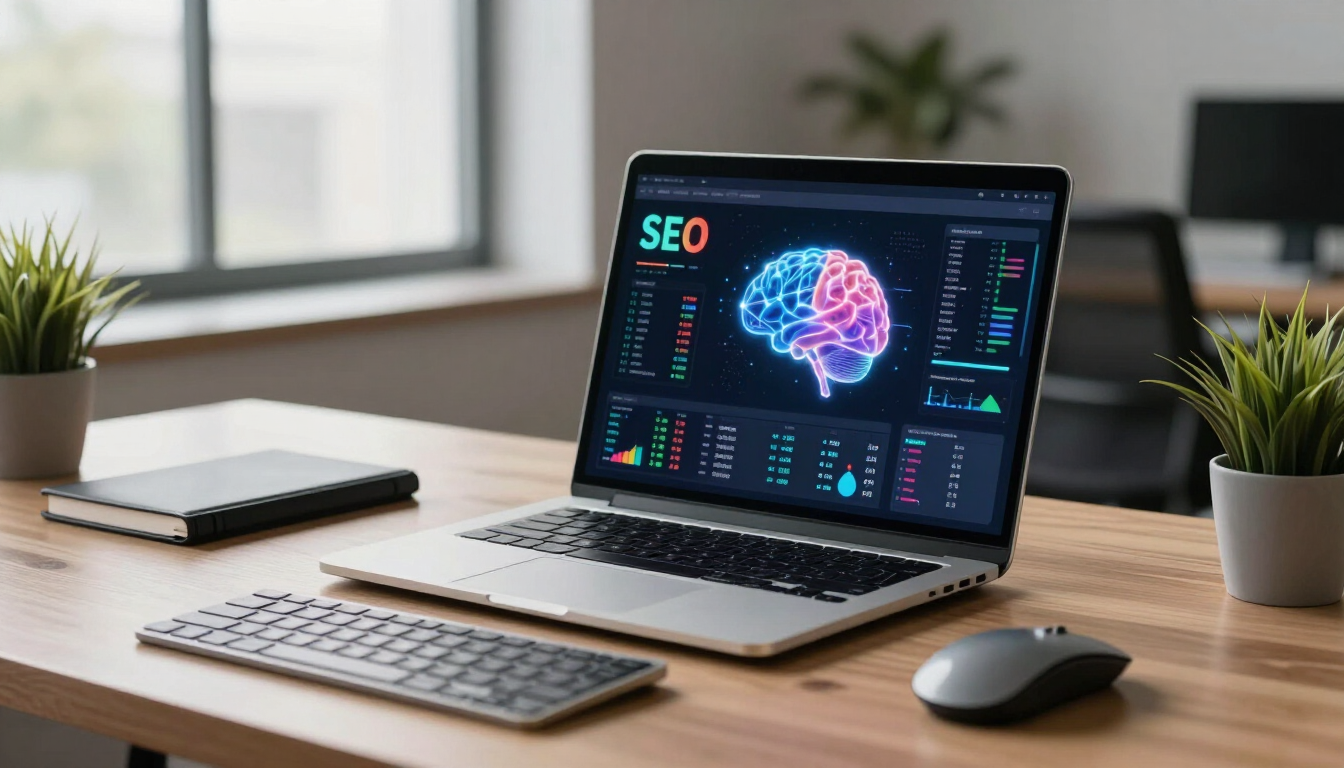
Digital Workspace Interface

How does this influence Google AI Overviews?

Google AI Overviews and other answer engines like Perplexity or ChatGPT increasingly rely on verified, authoritative sources to generate responses. When you add social media to Google Search Console, you are effectively telling these AI models, "This content is official and verified." This is a cornerstone of our Get Found by AI service at Primora.

AI engines look for corroboration across multiple platforms. If your website claims expertise in renewable energy, but your linked YouTube channel shows five years of project vlogs, the AI can cross-reference this data to increase your "trust score." This makes it significantly more likely that your business will be cited as a recommended provider in an AI-generated answer.

Key benefits of this corroboration include:

  • Improved accuracy in AI-generated brand summaries.
  • Higher likelihood of social media videos appearing in "See Also" AI sections.
  • Enhanced protection against brand impersonation in search results.
  • Streamlined data flow between your video content and your main website rankings.
  • Better attribution for multi-channel marketing efforts.

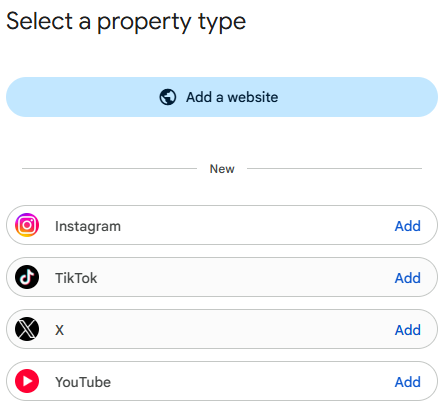
Steps to Link Instagram and TikTok to Search Console

While the process is straightforward, it requires administrative access to both your Google Search Console (GSC) account and the respective social platforms. Following these steps ensures your Growth SEO strategy is fully integrated with your social output. Note that the interface may vary slightly as Google updates its UI, but the core logic remains focused on the "Associations" tool.

  1. Log into Google Search Console: Select the specific domain property you wish to manage.
  2. Navigate to Settings: Locate the 'Settings' icon in the bottom left sidebar of the GSC dashboard.
  3. Access Associations: Click on 'Associations' under the General settings tab to see existing connections.
  4. Create a New Association: Click the 'Associate' button and choose the type of property (e.g., YouTube channel, Android App, or Social Profile).
  5. Verify the Connection: Follow the prompts to sign into the social account to confirm you have the authority to link the two entities.

What social platforms are currently supported by Google?

Google has expanded its list of supported properties to include the most influential platforms for modern SMEs. Whether you are a local salon or a national professional service provider, these integrations are vital. Currently, the system prioritizes platforms that host significant amounts of discoverable content.

YouTube is the most deeply integrated, often allowing for automatic association if both accounts use the same Google login. For platforms like Instagram, TikTok, and X (formerly Twitter), the association helps Google understand that these are your "Official" handles. This prevents competitors or fan accounts from overshadowing your primary business presence in search queries.

At Primora, we recommend that all clients undergoing Website Design also immediately set up these associations. It is a fundamental step in building a robust digital foundation. By doing so, you ensure that your website isn't an island, but rather the central hub of a vibrant, multi-platform ecosystem.

Linking Social Media Concept

Enhancing Brand Authority via Associated Accounts

In the competitive Singapore market, brand authority is everything. When you add social media to Google Search Console , you are leveraging the power of E-E-A-T (Experience, Expertise, Authoritativeness, and Trustworthiness). Google’s Quality Rater Guidelines emphasize that the reputation of the creator is as important as the content itself.

Linking your YouTube channel, for instance, allows Google to see the depth of your video content. For a medical clinic, this might mean educational videos about procedures. For a construction firm, it could be time-lapse videos of project completions. This "Experience" and "Expertise" are then credited back to your main domain, helping your core service pages rank higher for competitive keywords.

How to troubleshoot GSC association errors?

Sometimes, the process to add social media to Google Search Console encounters hurdles. Common issues include permission mismatches or legacy verification methods that conflict with new settings. If you find that your social profiles aren't appearing in your Knowledge Panel even after association, it may be time for a comprehensive AI Audit to see how search engines view your brand.

Common troubleshooting steps include:

  • Checking if the email address matches across all platforms.
  • Ensuring that the social profile is set to 'Public' and not 'Private'.
  • Verifying that you have 'Owner' or 'Full' permissions in GSC.
  • Updating the 'About' section on social profiles to include your website URL.
  • Checking for conflicting Schema markup on your website’s homepage.

Digital Growth Opportunities for Singapore SMEs

For Singaporean SMEs, the digital market is incredibly dense. Standing out requires using every tool available in the Google ecosystem. Adding social media properties is a low-effort, high-impact task that many of your competitors are likely neglecting. It allows you to dominate more "real estate" on the Search Engine Results Page (SERP). Instead of just one blue link, you can have a Knowledge Panel, a Twitter carousel, and YouTube video results—all pointing back to your brand.

This is a key component of what we do at Primora: we don't just build sites; we build digital growth engines. By integrating Website Hosting with active social property management, we ensure that your technology stack is working in harmony. This holistic approach is what transforms a simple online presence into a lead-generation powerhouse.

Business Growth and Strategy

Will this help my business rank higher in 2026?

While linking social profiles is not a direct "ranking factor" in the same way that high-quality backlinks are, the indirect benefits are undeniable. By improving your brand's clarity and providing Google with verified data, you increase the likelihood of appearing in rich results and AI overviews. In a world where users often search for "[Brand Name] reviews" or "[Brand Name] videos," having these properties properly linked ensures the user always finds the official, most flattering content first.

As search continues to move toward an "Answer Engine" model, the importance of verified data will only grow. Those who take the time to link their digital assets now will be the ones who lead the market in 2026 and beyond.

Summary of Key Takeaways

To maximize your digital presence, you must bridge the gap between your website and social media. Adding these properties to Google Search Console is the most effective way to signal brand unity to Google's algorithms. This simple administrative task can lead to better AI visibility, more accurate Knowledge Panels, and a stronger overall digital reputation.

Quick Actions for Success:

  • Verify Ownership: Ensure you have owner-level access to GSC and your social accounts.
  • Link Associations: Use the 'Settings > Associations' menu to connect YouTube and other platforms.
  • Monitor Results: Check your Knowledge Panel after 2-4 weeks to see if social icons have appeared.
  • Audit Regularly: Use an AI Audit to ensure your cross-platform data is consistent.
  • Update Content: Keep your social profiles active to reinforce the expertise signals being sent to Google.

At Primora, we specialize in navigating these technical complexities so you can focus on running your business. Whether you need a complete Website Design overhaul or a strategic Full SEO campaign, we are here to help your SME transform through technology. Don't let your social media efforts go unnoticed by search engines—link them today and start building a more authoritative digital future.

Share this article:

Recent Posts

A futuristic representation of AI and SEO data integration for business growth.
17 August 2026
Discover if SEO is dead and why AEO and AI Visibility are the future of digital marketing. Learn how to combine these strategies for SME growth in 2026.

Digital marketing analytics dashboard showing AI search visibility metrics.
13 August 2026
Don't be fooled by inflated AI visibility stats on LinkedIn. Learn how to measure real ChatGPT and Google AI Overview impact for your business in 2026.
A glowing digital graph showing a website ranking reaching the number one spot on search results.
8 August 2026
Learn how to use ChatGPT to rank #1 on Google without triggering penalties. Discover the secrets of E-E-A-T and AI content strategy for SMEs in 2026.
27 July 2026
How Often Does a Website Need to Be Updated? For many businesses and founders, the question “how often should I update my site?” comes up regularly. The short answer: it depends on your goals, audience, and the type of content you publish. In general, regular updating websites are more trustworthy, perform better in search rankings, and deliver a fresher experience to visitors. This post explores factors that influence update frequency and practical strategies to keep a website lively and effective. Why updating websites matters Regular updates serve several key purposes: Search engine optimization (SEO): Search engines favor fresh content and updated information. User trust and engagement: Visitors expect current details, accurate product information, and timely announcements. Security and reliability: Updating plugins, themes, and core software reduces vulnerability. Brand relevance: Periodic updates reflect a living, active brand. Understanding these benefits helps tailor an update schedule to your needs. Factors that influence update frequency Content type and goals News sites and blogs often publish daily or multiple times per week. E-commerce sites benefit from frequent product and price updates, promotions, and seasonal landing pages. Corporate sites may update case studies, press releases, and services pages as new information becomes available. Portfolios and personal sites can balance quality over quantity, with updates tied to new work or testimonials. Audience expectations If your audience relies on you for timely information, more frequent updates are prudent. If you serve a niche with long-form evergreen content, less frequent changes may be appropriate. Technical considerations and maintenance Regular maintenance, security patches, plugin updates, backups, should be scheduled regardless of content updates. Neglecting these can harm performance and safety, no matter how often you post. SEO strategy Plan updates around keyword opportunities, seasonal trends, and content gaps. Fresh content plus on-page optimization can boost visibility over time. Practical update cadences There’s no one-size-fits-all answer, but here are common patterns you can adapt: Daily or near-daily updates: News portals, large media sites, or heavily social-driven platforms. Several times per week: Active blogs, content publications, or project-based sites with frequent iterations. Weekly updates: Routine blog posts, portfolio additions, or company news that doesn’t require real-time accuracy. Biweekly to monthly: Mostly static sites with occasional announcements or new resources. Quarterly or semi-annual: Static sites that focus on evergreen services, with updates tied to product launches or major milestones. Remember: consistency matters more than hitting a specific number. Decide on a realistic cadence you can sustain. Balancing quality with frequency Updating too often without substance can dilute value. It’s better to publish fewer high-quality pieces than frequent low-quality updates. Here are tips to maintain quality: Plan editorial calendars to map out topics, formats, and publishing dates. Batch-create content to ensure consistency and reduce last-minute rush. Use content formats that scale, such as short posts, resource pages, or updates to existing pages with new data. Regularly audit existing content for accuracy and relevance. Technical hygiene and proactive updates Security: Apply updates to CMS, plugins, themes, and server software promptly. Backups: Schedule regular backups before major updates. Performance: Monitor page speed after changes; optimize media and scripts. Accessibility: Revisit accessibility standards as you update content. Handling updates for different sections Home page: Keep it fresh with limited, high-impact changes, new promotions, featured works, or updated testimonials. Products and services: Update pricing, features, stock, and shipping information as needed. Blog and resources: Keep a publishing rhythm aligned with your audience; refresh older posts with updated data if needed. About and team pages: Reflect new hires, leadership changes, or shifts in services over time. Measuring the impact of updates Track engagement metrics: page views, bounce rate, average time on page, and conversions. Use SEO tools to monitor keyword rankings and organic traffic shifts after updates. A/B testing can help you compare different update approaches and find what resonates with your audience. Common pitfalls to avoid Inconsistent cadence: Irregular updates can confuse visitors and search engines. Outdated information: Don’t let old data linger; set review dates for pages with time-sensitive content. Over-optimisation: Constant keyword stuffing or excessive updates can harm readability and SEO. Final thoughts Updating websites is not just about keeping content fresh; it’s about maintaining accuracy, security, and alignment with your audience’s needs. Establish a sustainable cadence for content updates, perform regular site maintenance, and monitor impact to refine your approach over time. By treating updating websites as an ongoing practice rather than a one-off task, you’ll improve trust, visibility, and user satisfaction.

AI technology visualization for website visibility
21 July 2026
Learn how to optimize your website for AI search engines like ChatGPT and Perplexity with Primora’s guide to AI Visibility for Singapore SMEs.
26 February 2026
What is Generative Engine Optimization?
25 February 2026
How Much Does SEO Cost in Singapore?
19 February 2026
If you are a service-based business then its for you!
5 February 2026
Google Business Optimization
22 January 2026
What is Google Business Profile and How Does It Work?
Show More